
Full-Service Backflow Prevention Contractor Serving Raleigh and Durham, NC and upstate South Carolina Areas
Backflow Prevention Services by Modern Plumbing and Backflow
At Modern Plumbing and Backflow, we specialize in comprehensive backflow prevention solutions for residential, commercial, and industrial clients across the Raleigh-D urham area in North Carolina, including surrounding towns like Chapel Hill (served by OWASA), Cary, Apex, Wake Forest (served by City of Raleigh), and more. We also extend our services to the Greenville-Spartanburg region in South Carolina and the communities in between, such as Anderson, Asheville, and Hendersonville. Our certified technicians ensure your water systems comply with local regulations in both states, protecting your potable water supply from contamination. Whether you need installation, testing, repair, or certification, we’re here to help keep your water safe.
What is Backflow?
Backflow occurs when water flows in the opposite direction in your plumbing system, potentially allowing contaminants or pollutants to enter the clean drinking water supply. This can happen due to two main causes: backsiphonage (caused by a drop in pressure in the supply line, creating a vacuum) or backpressure (when downstream pressure exceeds supply pressure, such as from pumps or boilers). Without proper prevention, hazardous substances like chemicals, fertilizers, or wastewater could reverse flow and contaminate public water systems.
Why is Backflow Prevention Important?
Backflow prevention is crucial for safeguarding public health and maintaining the integrity of potable water supplies. Contaminated water can lead to serious illnesses, as pollutants or toxins from non-potable sources (e.g., irrigation systems, fire sprinklers, or industrial processes) mix with drinking water.
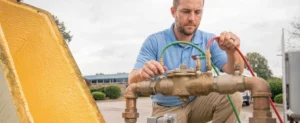 In North Carolina, regulations are overseen by local utilities with guidance from the state, mandating backflow prevention devices on cross-connections—examples include Raleigh’s Cross Connection Control Program and Durham’s Cross Connection Control. In South Carolina, the Department of Environmental Services (DES) Cross Connection Control & Backflow Prevention program mandates protections statewide, with local enforcement by utilities like Greenville Water and Spartanburg Water.
Failure to comply can result in fines, water shutoffs, or health hazards. Regular installation and testing not only ensure compliance but also protect your property and community from costly contamination events.
Types of Backflow Prevention Devices
We install and maintain a variety of backflow preventers tailored to your system's hazard level (low, medium, or high). Here are the most common types we handle:
Reduced Pressure (RP) Zone Assembly
An RP device consists of two independently acting spring-loaded check valves separated by a hydraulically operated relief valve. It's designed for high-hazard applications and protects against both backsiphonage and backpressure by venting water through the relief valve if pressure differentials occur. Ideal for commercial or industrial setups like chemical plants or hospitals. Must be installed above ground and tested annually in most jurisdictions.
Double Check (DC) Valve Assembly
A DC assembly features two spring-loaded check valves in series. It's suitable for low-to-medium hazard situations and guards against both backsiphonage and backpressure, but without a relief valve, it's not for high-hazard contaminants. Commonly used in fire sprinkler systems or residential irrigation. Like RPs, they require periodic testing and can be installed underground in some cases.
Pressure Vacuum Breaker (PVB)
A PVB includes a check valve and an air inlet valve that opens under vacuum conditions to prevent backsiphonage. It's effective for high-hazard backsiphonage but not backpressure, so it's not suitable for systems with pumps or elevated tanks. Often used in irrigation systems. Installation must be at least 12 inches above the highest outlet, and it cannot be subjected to continuous pressure.
Our team can assess your property to recommend the right type based on local codes in NC or SC.
Frequently Asked Questions (FAQ)
Have you received a notice from your city or town to have your backflow tested?
Yes, many customers receive annual or periodic notices from their local water utility requiring backflow testing. Don't ignore it—failure to comply can lead to fines or water service interruption. Simply call us to schedule your certified testing appointment. We'll handle the test, any needed repairs, and submit the results to your utility for you.
What causes backflow?
Backflow is triggered by pressure changes, such as gravity, vacuum, or elevated downstream pressure from equipment like boilers or sprinklers.
How often do backflow devices need testing?
In North Carolina, testing is required annually for commercial/high-hazard devices and up to every three years for residential (check local programs like Cary or Apex). South Carolina requires annual testing statewide via DES guidelines, with local enforcement (e.g., Greenville Water).
Can I install a backflow preventer myself?
While possible for simple setups, we recommend professional installation to ensure compliance with state plumbing codes. Improper setup can lead to failures or violations.
What's the difference between RP and DC?
RP offers higher protection with a relief valve for high hazards, while DC is for lower risks without the vent. PVBs are for backsiphonage only.
Do all properties need backflow prevention?
Yes, if there's a cross-connection (e.g., irrigation, pools, or fire lines). NC and SC laws require it to protect public water.
What happens if my device fails a test?
We'll repair or replace it promptly to restore compliance and safety. Untested or failed devices can lead to water service interruptions.
For more questions or to schedule a service, contact us today!
Ready to protect your water system?
We offer free consultations in the Raleigh-Durham, NC, and Greenville-Spartanburg, SC areas. Ensure your compliance and peace of mind with our expert services.